Application note
Pay for Certainty, Not Just Speed: A Quality Manager's Case Against the Cheapest Sensor Quote
-
The cheapest quote I ever approved cost us $22,000
-
The differential pressure sensor that wasn't within spec
-
The Balluff BNI IO-Link master default IP address problem
-
Fluke multimeters, iPhone thermal cameras, and the illusion of "good enough"
-
The part nobody quotes you: buffer time
-
"Isn't brand-name pricing just a tax on people who don't know better?"
-
Pay for certainty. Sleep better. That's the trade.
The cheapest quote I ever approved cost us $22,000
I'm a quality and brand compliance manager at a mid-sized system integration firm. I review every sensor spec sheet and inbound batch before it reaches a customer—roughly 300 line items a year. In our Q1 2024 audit, we rejected 14% of first deliveries. Not because the parts were broken. Because they weren't what the spec said they'd be.
Here's my position, stated plainly: in industrial automation, the cheapest quote is rarely the cheapest decision. What you're actually buying when you pay a premium is certainty—certainty of specification, certainty of configuration, certainty of delivery. Speed is secondary. Certainty is the product.
I know how that sounds. Budgets are real. I've sat in the meetings where someone holds up two quotes and asks why we're paying 30% more for what looks like the same box. I've asked that question myself. Four years of spec reviews later, I have a different answer.
The differential pressure sensor that wasn't within spec
In 2023 we sourced a batch of differential pressure sensors for a cleanroom monitoring project. The budget quote listed ±1% full scale accuracy. Our spec called for ±0.5%. The vendor's rep told our buyer it was "functionally equivalent."
It wasn't. We bench-tested five units at 0.5 bar differential, and the worst one read 3.2% off—more than three times the stated tolerance. The vendor's response: "That's within industry standard for this price point."
Maybe it was. But "industry standard for this price point" is not the same sentence as "meets our spec." We rejected the batch, the vendor redid it at their cost, and the project slipped two days. Nobody remembers the savings. Everybody remembers the delay.
Here's what most buyers don't realize: a spec sheet is a promise, and ±1% FS on a differential pressure sensor is a promise with a lot of room inside it. The cheap quote isn't lying. It's just answering a question you didn't ask.
The question everyone asks is "what's your best price?" The question they should ask is "what happens when this reads wrong at 2 a.m. on a Sunday?"
The Balluff BNI IO-Link master default IP address problem
Last year we commissioned a new line with twelve Balluff BNI IO-Link masters. Solid hardware. Good ecosystem. Wide device support. None of that mattered on day one, because two of my engineers plugged the masters in and assumed they'd come up on DHCP.
They don't. The BNI IO-Link master ships with a static default IP address, not a DHCP client. As the manual states—and as we should have read more carefully—you configure it through the Balluff engineering tool for IO-Link, or you set it manually before it ever talks to your network. My engineers spent a full morning chasing a connection that was never going to appear.
Is that Balluff's fault? No. The documentation is clear. The engineering tool works.
But here's the lesson I took from it, and it's the same lesson as the differential pressure sensor: you don't buy a device. You buy the outcome of that device being configured correctly. If we'd bought from a distributor who pre-configures masters and documents the default IP scheme, we'd have paid maybe 8% more and saved a morning of two engineers' time. That morning cost us more than 8%.
Certainty isn't just about whether the part works. It's about whether it works in your network, on your protocol, with your tooling, on the day it arrives.
Fluke multimeters, iPhone thermal cameras, and the illusion of "good enough"
A junior engineer asked me last quarter: "Which Fluke multimeter should I buy?"
My honest answer was: depends what you're measuring. A Fluke 117 is fine for general electrical work. If you're doing industrial maintenance with motors and VFDs, you want something with true-RMS and better low-pass filtering—the 1587 or similar. Fluke's own selection guide lays this out clearly. The mistake isn't buying the wrong Fluke. The mistake is buying a $40 meter with a Fluke-shaped body and hoping the readings are the same.
They're not. And you find out at the worst possible moment, usually when you're trying to prove a circuit is dead.
The same logic applies to thermal imaging. Someone on the team suggested a thermal camera for iPhone instead of a standalone unit. For quick checks around the office, an iPhone thermal attachment is genuinely useful—it's cheap, portable, and good enough for spotting a hot breaker. But for electrical predictive maintenance on a production line, the resolution, thermal sensitivity, and temperature range are compromises. A phone attachment tells you something is warm. A proper thermal camera tells you how warm, where exactly, and whether it's trending.
Both tools work. Only one of them gives you a reading you'd sign your name to in a compliance report.
The part nobody quotes you: buffer time
Here's something vendors won't tell you: standard lead times usually include buffer. That two-week quote is often a one-week build plus a week of queue management. It's not deception—it's how production planning works. But it means the "guaranteed 5-day" option isn't always five days faster. Often it's the same part, moved to the front of the queue because you paid for the certainty of the slot.
That's what rush fees actually buy. Not speed. Priority. The removal of "probably" from the sentence.
In March 2024, we paid a premium for guaranteed delivery on a sensor retrofit. The alternative was a "should ship by Friday" promise on a project with a $15,000 customer milestone attached. We paid the premium. The parts arrived on time. I have no idea whether the standard option would have made it. I don't want to know.
"Isn't brand-name pricing just a tax on people who don't know better?"
To be fair—sometimes, yes. I've seen premiums that had nothing to do with quality. I've pushed back on quotes where the only difference was the logo on the datasheet.
But I'd argue the comparison isn't between two purchase prices. It's between two total costs. The cheap sensor that fails after 18 months costs you the replacement, the downtime, the engineer's afternoon, and the customer conversation. The expensive sensor that runs for five years costs you the purchase price and nothing else.
Granted, not every application needs the premium option. A non-critical presence sensor on a conveyor? Buy the cheap one. A differential pressure sensor on a cleanroom compliance system? Different conversation entirely.
I have mixed feelings about paying for brand certainty. Part of me resents the premium. Another part of me remembers the $22,000 rework, the two-day delay, and the two engineers staring at a BNI master that was never going to answer a DHCP request.
Pay for certainty. Sleep better. That's the trade.
If you take one thing from four years of spec reviews, take this: the expensive quote is the one that costs you something after it arrives. The cheap quote that works is a bargain. The cheap quote that almost works is the most expensive line item in the project.
Specs. Configuration. Delivery. Support. In that order. Pay for the version of those four things you don't have to think about again.
That's not a brand preference. That's a quality decision.
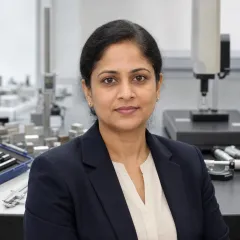
Rina Deshmukh
Rina Deshmukh is a dimensional metrology analyst focused on calipers, micrometers, height gauges, dial indicators, optical comparators, and surface roughness testers. She references ISO 13385-1 and ISO 3611 while examining resolution, repeatability, maximum permissible error, contact force, temperature effects, and measurement uncertainty. Her articles help machinists, inspectors, and quality managers select measuring tools, define verification intervals, and build methods appropriate to drawing tolerances.